

by


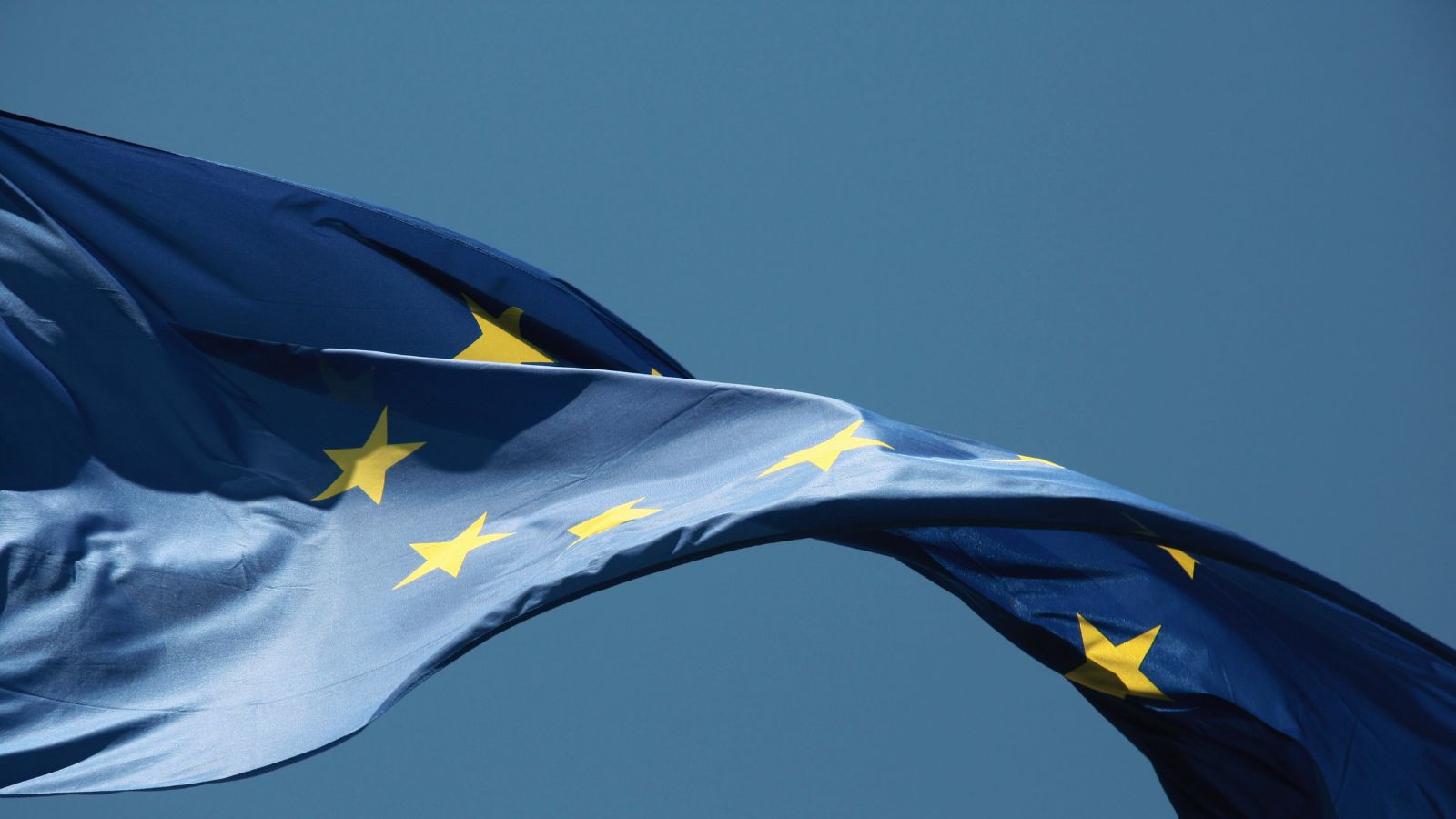

The European Union is facing unprecedented challenges at a time when the UN-based multilateral order is under sustained attack. Russia’s war of aggression against Ukraine, and Trump’s confrontational posture towards the EU, as confirmed by the recently published National Security Strategy, are existential threats to the future of European democracy and our fundamental freedoms.
European leaders and the EU institutions must stand firmly by our values, and by doing so demonstrate the strength of the European Union and its utility in defending European security, prosperity, legal order and human rights, the very things that Europeans have come to expect from our Union.
As much as we would like to believe that the US remains an ally, public statements by President Trump and leading figures in his administration make it abundantly clear that one-sided concessions have neither reduced unpredictability nor strengthened transatlantic stability.
On the contrary, we find ourselves confronted with an outspoken critique of the EU and what it stands for, and a concerted assault on our democratically elected governments and EU institutions, with the declared intention to bring to power extremist-populist movements that will bring back a divided Europe of nationalism, fragmentation, weakness and vassalage.
The National Security Strategy seeks to undermine the foundations of the European project, a democratic Union founded on values and rule of law. It explicitly endorses far-right and nationalistic actors who seek to undermine our fundamental rights and undermine the EU’s ability to defend those rights.
Europe must therefore draw the necessary conclusions: our security and defence, our prosperity and democracy can be safeguarded only if we pull together. Strategic autonomy is an absolute necessity. The European Union must quickly adapt, be enabled to act as an independent actor, assume full responsibility for its own security and defence, pursue its interests and defend its founding values internally as well as on the global stage with enhanced credibility and with shared sovereignty between its Member States, while pursuing renewed political and economic cooperation with likeminded states.
Only through reasserting its support for democratic governance, human rights, economic prosperity and social rights can the EU strengthen social cohesion and democratic resilience in the face of attempts to divide and fragment our Union. In addition, the EU can and must fill the vacuum left by the US in the global multilateral system, actively uphold international law and protect multilateral bodies such as the UN.
A precondition for both geopolitical power and social security is the pursuit of a more competitive Europe, able to deliver common prosperity for Europeans. The full implementation of the Letta and Draghi reports on the completion of the Single Market and on European competitiveness by 2028 can help the EU meet that objective. A competitive Europe is also a sustainable Europe; efforts to simplify EU laws must not be sought at the cost of dismantling core elements of environmental and social protections.
We also need to equip the EU with a budget of a size adequate to finance genuine European public goods, including in defence, research and innovation, housing, education and skills, while preserving social and environmental protections, regional cohesion and agriculture policy.
Furthermore, the EU budget must continue supporting a vibrant civil society, and a global Europe whose external relations and development assistance are rooted in EU values, with full respect for parliamentary control and the role of regions and cities. This new, enhanced budget should be financed through ambitious and genuine EU own resources.
However, regaining competitiveness and modernising the budget are not sufficient to build a geopolitical Europe. Therefore, Member States in the European Council of the EU must move swiftly towards European Common Defence as provided for in Article 42 of the Treaty on European Union. In the absence of unanimity, this can be achieved through a new Permanent Structured Cooperation among the willing Member States, or an ad hoc treaty as was done when establishing the Schengen Agreement for free movement (the “Schengen of Defence”). This must lead to a true European Defence System capable of pulling together Member States’ armed forces in the event of aggression against any Member State, including the strengthening of the Rapid Deployment Capacity and the creation of a European command-and-control centre.
To achieve this, we must move boldly towards closer integration if we are to cope with these critical challenges, ensuring European sovereignty and respect for fundamental values and rights. Ambitious decisions and political leadership are needed, beyond narrow national interests and personal political aspirations. If we fall short, if we are not brave enough to meet this challenge united, we risk perishing divided, forced to accept that the fate of the world is decided under the political authority of Donald Trump, in an ambiguous partnership with Vladimir Putin and Xi Jinping.
To that end, Europe needs to move beyond national vetoes for decisions on foreign policy, defence and shared finances, which prevent the Union from acting quickly when needed most. The power to block progress removes the incentive for compromise and consensus building. In all democratic systems, decisions are made by majority, and the EU has shown its ability to integrate and accommodate the views of all its members when agreement is needed on issues of importance to the Union as a whole. The existing Treaties include clauses (the so-called “passerelle” clauses) that allow the shift from unanimity to qualified majority voting but are yet to be utilised. Decisions on budgetary and fiscal policy, foreign, security and defence policy, as well as accession of new Member States, must take place using qualified majority voting, including future Treaty revisions.
Alongside the Member States in the European Council, the European Parliament has an essential role in driving these changes. It can build wider support by bringing together national parliaments and citizens through joint assemblies designed to involve them directly in shaping and endorsing the necessary policy changes.
We therefore plan to pursue the creation of a renewed, cross-partisan and inter-institutional pro-European coalition, bringing together the most committed Member States in the European Council, the pro-European majorities in the European Parliament and national parliaments, the European Commission, regional and local authorities, and organised pro-European civil society. Together, we will mobilise at local, national and European level in support of these objectives, with the aim of building urgently and immediately a more sovereign, more democratic and more effective European Union.
12. December 2025
European Movement International


In its response to a European Commission consultation on the activation of people facing barriers to employment, CESI calls for measures that prioritise quality jobs, adequate social protection and performing public services to help people access jobs.
.png)
Last week Friday, CESI and its Romain member 'Union of Free Trade Unions in Pre-University Education of Iași' (USLIP Iași) brought together trade union representatives, policymakers, social partners and European experts to discuss the implementation of the European Pillar of Social Rights in the Romanian education sector.
Subscribe now and receive newsletters and much more!
.png)