


by


It was a busy week for educators in Brussels featuring meetings of European education ministers and culminating in the Education Summit on Friday. A common theme across discussions last week was the so-called basic skills emergency gripping Europe. The latest PISA results show the scale of the challenge. Across the EU, around one in three 15-year-olds fell short of the minimum proficiency level in reading, with a similar share struggling in mathematics.
Against this background, on 18 November, CESI’s Expert Commission on Education met in Brussels as part of the Dialogue+ project co-financed by the EU. At the accompanying public CESI@noon session, Teaching Europe’s future: What PISA and TALIS results tell us, members discussed the latest findings on pupils’ learning and teachers’ working lives with representatives of the European Commission and the OECD.
For CESI’s teacher unions, tackling the basic skills emergency starts with improving teachers’ working conditions. When schools have enough qualified staff and workloads are manageable, teachers have time to notice when a pupil is struggling and to work through the difficulty with them. The PISA results show why that individual attention matters. Across many education systems, pupils who reported greater support from their science teachers, including extra help when they needed it, tended to achieve higher scores in science.
Attracting and retaining the next generation of teachers
The latest TALIS findings illustrate the recruitment challenge. Across the 23 EU countries surveyed, around 40% of lower-secondary teachers were aged 50 or over, while only 8% were under 30. Retaining younger teachers is also a concern. Some 15% of teachers under 30 said they intended to leave the profession within five years.
These data were confirmed during our latest exchanges; CESI members stressed that many teachers value their work yet see little prospect of building a career in it. And while the excessive administrative work leaving less time to prepare lessons and support pupils affect those already in the classroom, precarious contracts and poor pay in some areas can deter young people from even entering teaching. Secure employment, fair pay and better career prospects are among the priorities that could upward the trend, as CESI raised in its assessment of the EU Teachers and Trainers Agenda.
Recruitment and retention also featured in the Council conclusions on science, technology, engineering and mathematics (STEM), adopted on 19 November. Education ministers called on Member States to attract, retain and support qualified STEM teachers. On Friday 20 November, the European Education and Skills Summit devoted a session to making teaching more attractive and improving career opportunities.
For CESI, these calls must now be followed by concrete action and sustained public investment so that more young people see a future in teaching, and those already in the classroom have the support they need to stay.
Supporting teachers as AI enters the classroom
Members discussed what the growing use of AI means for pupils who are still developing their reading skills. The PISA findings on pupils’ use of AI to summarise assigned reading raise a practical question. When pupils go straight to a summary, how do they learn to follow an argument, compare sources and form their own judgement?
The TALIS findings also point to a gap in European teachers’ preparation for using AI in the classroom. Teachers in the EU were less likely than their OECD peers to have taken part in professional training on using AI for teaching and learning.
CESI members called for a discussion with teachers and education providers about where AI can serve a teaching purpose in each subject. They stressed the importance of designing AI tools for education from the outset. Teachers should help identify the learning needs a tool is intended to address and assess how well it meets those needs in the classroom.
The Council conclusions adopted on 19 November also addressed AI literacy. Education ministers called for AI literacy to form part of initial teacher education and continuing professional development, while youth ministers emphasised the importance of helping young people assess information critically and recognise manipulation online.
For CESI’s teacher unions, putting these aims into practice means giving teachers time within the working day to develop their skills and the professional autonomy to decide when an AI tool will help their pupils learn.

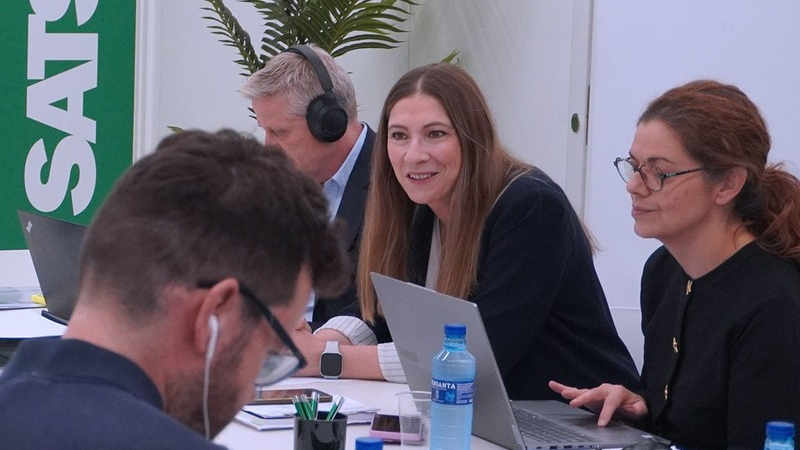


In Madrid, on 14 October 2026, the European Confederation of Independent Trade Unions (CESI), together with its Spanish member organisation SATSE, brought together trade union representatives and European stakeholders, including member of the European Parliament Alicia Homs and Eurofound, for a regional conference organised in the framework of the EU co-funded DIALOGUE+ project.

Digitalisation must be done with workers, not to workers. That was one of the central messages emerging from yesterday’s CESI@noon on “Europe’s digital transition: The role of workers in advancing businesses’ digitalisation”, organised by CESI - Independent Trade Unions in cooperation with the University of St.Gallen (FAA-HSG).
Subscribe now and receive newsletters and much more!