


by

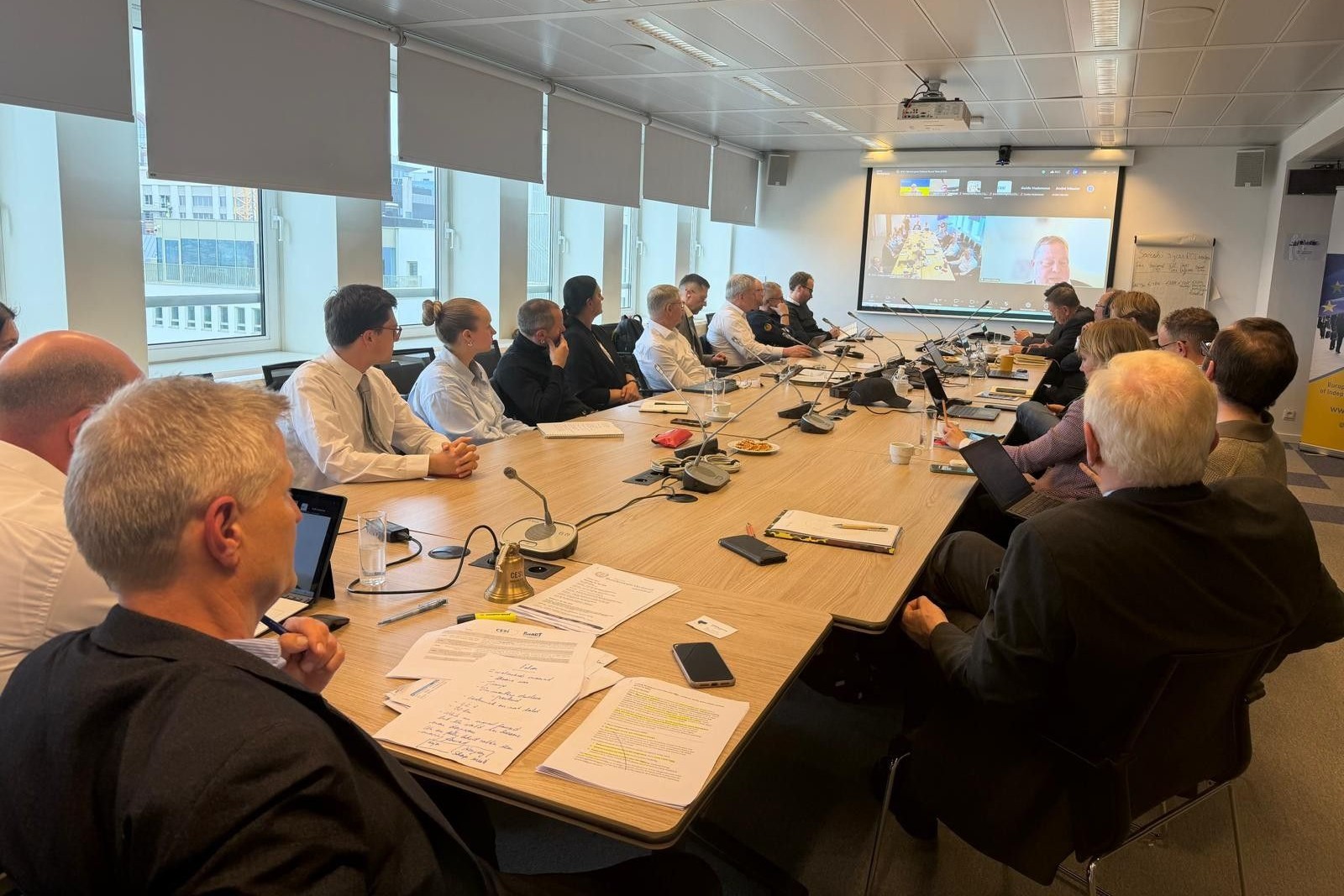

The debate focused on how Europe can move from defence coordination to real readiness, industrial capacity and joint procurement, while ensuring that the EU’s defence agenda remains rooted in social rights, democratic accountability, strong public services and social dialogue.
Klaus Heeger, CESI Secretary General, opened the event by stressing that Europe’s preparedness must be people-centred and firmly linked to the European Pillar of Social Rights, in line with the CESI)’s EU co-funded PillACT project, ensuring that defence readiness goes hand in hand with fair working conditions, public services and social dialogue.
Fabian Zuleeg, CEO of the European Policy Centre (EPC), reflected on the main milestones of the EU Defence Union and underlined the need to translate strategy into practice through coherent implementation, stronger capabilities and readiness across Member States. He argued that while positive steps have been taken, Europe is still falling behind the scale of challenges requiring linear responses to exponential threats.
Sebastian Käding, affiliate of CESI’s German member DBwV (German Armed Forces Association) and President of CESI’s statuary Expert Commission ‘Defence and Security’, highlighted the role of civilian employees in the defence sector and the importance of social dialogue in making readiness effective and sustainable.
Emmanuel Jacob, President of the European Organisation of Military Associations (EUROMIL), brought in the perspective of military personnel, pointing to working conditions, representation and the role of armed forces in a changing security landscape. He highlighted challenges in military personnel recruitment and retention across European armed forces, emphasising the need for better working conditions and social dialogue.
MEP Tobias Cremer, Member of the European Parliament Committee on Security and Defence, addressed how EU defence commitments can be translated into industrial capacity, deployable readiness and practical cooperation across Member States. He advocated for a whole-of-society approach to security, emphasizing the need for European integration in defence and the importance of financing defence through broader economic initiatives rather than budget cuts in other areas. The discussion covered topics including Ukraine's reconstruction, the use of frozen Russian assets, European defence spending, and the role of NATO in European security. Lastly, he stressed that Europe’s capacity to defend itself will depend not only on resources and military strength, but also on a common belief that liberal democracy and the European project deserve protection.
The discussion confirmed that Europe’s defence choices will have major societal and budgetary implications. CESI will continue to advocate for a defence agenda that strengthens Europe’s security while upholding social rights, public trust and democratic legitimacy.

.png)


Yesterday, the Council adopted a Recommendation on addressing housing exclusion and homelessness, marking another step towards a stronger European response to the housing crisis - a concern especially of young persons and workers across Europe.
.png)
In Madrid, on 14 October 2026, the European Confederation of Independent Trade Unions (CESI), together with its Spanish member organisation SATSE, brought together trade union representatives and European stakeholders, including member of the European Parliament Alicia Homs and Eurofound, for a regional conference organised in the framework of the EU co-funded DIALOGUE+ project.
Subscribe now and receive newsletters and much more!
