

by


Reinhard Biebel, Deputy Head of Unit ‘Corporate Tax Transparency’ at the European Commission, gave an overview over the past, current and future activities of the European Commission to fight tax avoidance and evasion. Ensuring the proper functioning of as well as improvements to the existing framework in the EU for administrative cooperation was in the centre of attention of the debate. The challenges of taxation of the digital economy – among them legal loopholes and ring-fencing the concerned companies and platforms- were outlined. In their reacting comment, Romain Wolff, President of CESI, and Fernand Muller, CESI representative in the European Commission’s consultative Platform for Tax Good Governance, stressed that fair taxation remains a foundation of any society; that work needs to be increasingly taxed, given increasing robotisation and automatisation; that it remains unacceptable that private companies are increasingly advising governments on tax legislation; and that it is fundamental for an efficient implementation and application of tax laws that tax authorities are well-staffed and well-equipped. The members of the trade councils agreed to continue their efforts for a fair taxation of the digital economy and transparent policies for more tax justice in the EU and beyond.
Lavinia Steinfort, project officer and researcher at the Transnational Institute, presented the results of the international research project Reclaiming Public Services.
According to the findings of the project, many privatisation activities promises did not meet their expectations while cost-efficiency targets remained unmet and labour conditions deteriorated, jobs were cut, prices increased and infrastructure investments declined, with, in sum, the accessibility and the quality of services of general interest decreasing.
She highlighted that the trend to re-municipalise is much more common than presumed. CESI affiliates stressed that the control over and the guidance of privatisation must remain in the hands of public authority and that democratic participative approaches remain important. They underlined that strategies to build and finance projects have a clear added value with citizens’ participation in decision making processes. They noted regret that EU legislation sometimes creates obstacles for municipalities as they have to comply especially with the expansive EU Services Directive.
Stephan Lauringer from the Austrian Federal Ministry for the Public Service and Sport, outlined different strategies to recruit young persons for public administrations. In addition to good working conditions, safe employment and good remuneration, specific strategies aim at offering apprenticeships and internships in order to allow recruitment among these, he said. he added that motivations to join public services are different, but that the main incentives are often expected prospects of harmony and security along with relatively attractive arrangements on working time, annual leave and work-life-balance. He stressed that key incentives for young job seekers in particular seem to be expected safety, stability as well as job satisfaction and self-fulfillment.
On the request of Massimo Battaglia, Vice-President of the Trade Council on Central Administrations and Finances, who strongly criticised a widespread lack of esteem for public services and their staff, it was agreed that CESI will continue its efforts to boost the recognition of the importance of public sector, public sector workers and the specificities of public employment – both at the EU and national levels.
With reference to a main motion on public services adopted by the last CESI Congress, CESI President Romain Wolff concluded the meeting with the following statement: “To serve the common good, in the interest of economic stability and for the well-being of people, public services have to remain under public responsibility. They have to be well-equipped and -resourced, and most importantly: Public services and public service workers have to be supported and esteemed by our societies. A change of paradigm is now more needed than ever.”
Picture: © CESI 2019


On UNESCO’s World Teachers’ Day 2026, Luc Viehé, President of the CESI's Expert Commission ‘Education’, calls for renewed attention to teachers’ working conditions and to the place of education in national and European policy priorities.
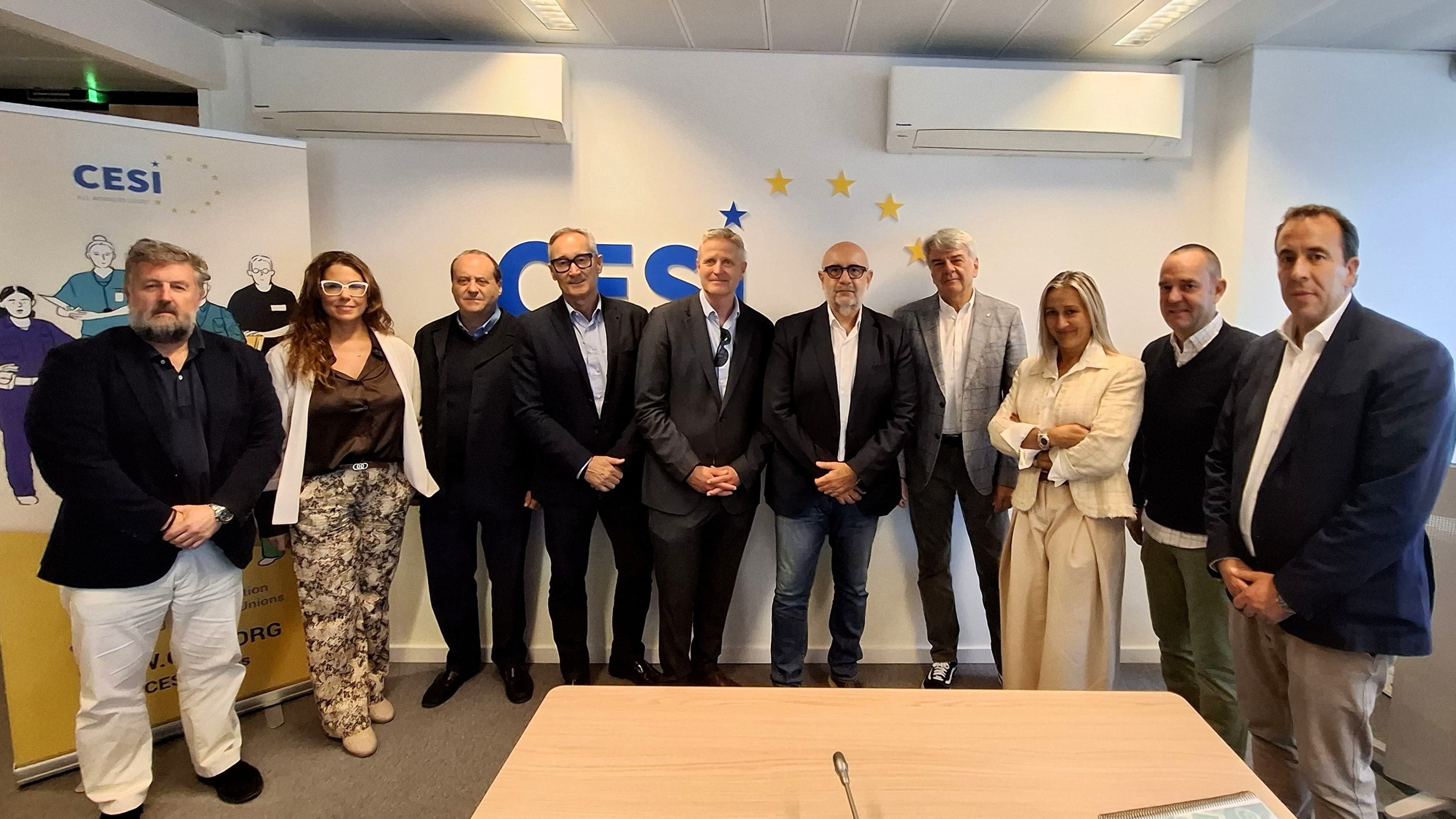
On September 22 and 23, CESI hosted a visit of a delegation comprising the leadership of its Spanish member organisation CSIF in Brussels for trade union policy advocacy meetings to implement the European Pillar of Social Rights in the Spanish country context.
Subscribe now and receive newsletters and much more!