


by



The hybrid conference, held in the context of CESI's EU co-funded PillACT project, brought together trade union representatives, policymakers, social partners and European experts in Belgrade, Serbia, to take stock of working conditions and trade union rights in the health care sector in Serbia and the wider Balkan region.
In particular, the conference explored how the European Pillar of Social Rights and social dialogue tools can support improvements in working conditions, collective bargaining and trade union freedoms, particularly in the context of Serbia’s EU accession process.
The event placed a particular emphasis on key challenges facing healthcare workers, including staff shortages, collective bargaining and the protection of fundamental rights. Discussions also examined links between democracy, the rule of law and social rights, highlighting the importance of strong trade unions and meaningful social dialogue.
Through practical examples and the presentation of an action toolkit for members prepared by CESI, the conference aimed to identify ways to translate European social principles into concrete improvements for workers and healthcare systems across the region.
Key themes included the gap between existing legislation and implementation, the strategic use of EU accession frameworks by trade unions, and the urgent need to address health care staff retention through governance reform—not salary alone.
Ljubinka Kovačevi, Professor of Labour Law at the University of Belgrade Faculty of Law, highlighted the applicability of EU acquis in key areas of labour and non-discrimination law in the context of EU accession negotiations, also flagging areas in which the Serbian legislation could be better harmonised.
Milena Popović Samardžić, Vice-President of CESI and President of the Montenegrin Trade Union of Physicians (SDMCG), showcased the experience of their own trade union experience in acquiring collective bargaining rights, representation and salary increases of 100% in Montenegro.
Dr Maja Vuckovic-Krcmar, Medical Advisor and Programme Officer at the Delegation of the European Union to Serbia, explained that since Serbia’s candidacy to the EU in 2012 only 2 chapters of the negotiations closed (out of 35 open) and that cluster 3 (social policy, employment, education) is not yet opened due to lack of unanimity among member states. Roughly 18% of reform agenda commitments have been fulfilled so far, limiting access to Serbia's access to funds and other facilities, she noted. An important mention was the fact that approximately 10,000 Serbian health professionals are estimated to be working abroad and that there are only 27 sanitary inspectors for the entire country — a concrete example of implementation failure despite adequate legislation. On a more positive note, the EU has invested over half a billion euros in Serbia's health sector, including 252 emergency medical vehicles, laboratory renovations, and e-health infrastructure, she emphasized.
In his remarks, CESI Secretary General Klaus Heeger underlined the importance of moving beyond political commitments and translating the principles of the European Pillar of Social Rights into tangible improvements for healthcare workers also in EU accession candidate countries such as Serbia. He emphasised that strong, independent trade unions, effective collective bargaining and meaningful social dialogue are essential not only to protecting workers’ rights, but also to building resilient, accessible and high-quality healthcare systems. In this context, the EU accession process offers an important opportunity to advance social rights and strengthen the role of trade unions in shaping reforms, he said.
Gorica Djokic, President of the SLFS, highlighted the importance of regional cooperation and solidarity in addressing the challenges faced by healthcare professionals in Serbia and across the Western Balkans.
The conference provided a valuable platform for exchanging experiences, identifying common priorities and reinforcing the collective commitment to improving working conditions, professional recognition and trade union representation. The Belgrade conference reaffirmed a central message of CESI's PillACT project: Social rights must go beyond principles on paper and become a reality in workers’ everyday lives.
By connecting European policy frameworks with the experiences of trade unions on the ground, CESI and its partners remain committed to turning dialogue into action, strengthening workers’ voices and contributing to fairer, more sustainable healthcare systems across Europe.




Yesterday, the Council adopted a Recommendation on addressing housing exclusion and homelessness, marking another step towards a stronger European response to the housing crisis - a concern especially of young persons and workers across Europe.
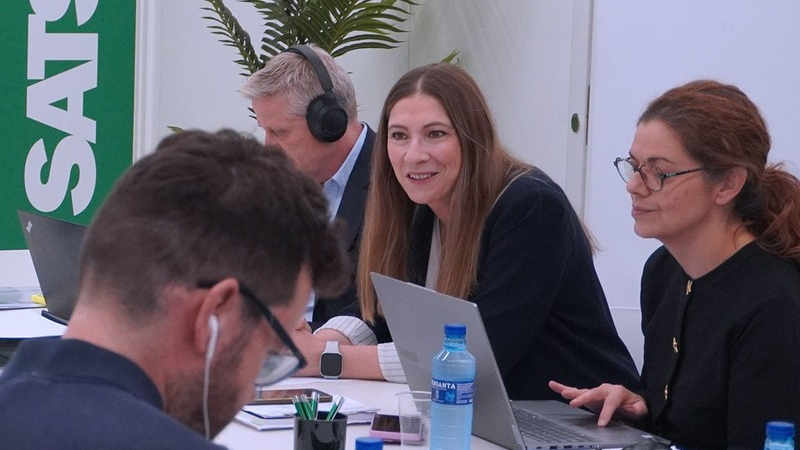
In Madrid, on 14 October 2026, the European Confederation of Independent Trade Unions (CESI), together with its Spanish member organisation SATSE, brought together trade union representatives and European stakeholders, including member of the European Parliament Alicia Homs and Eurofound, for a regional conference organised in the framework of the EU co-funded DIALOGUE+ project.

In its response to a European Commission consultation on the activation of people facing barriers to employment, CESI calls for measures that prioritise quality jobs, adequate social protection and performing public services to help people access jobs.
Subscribe now and receive newsletters and much more!