


by

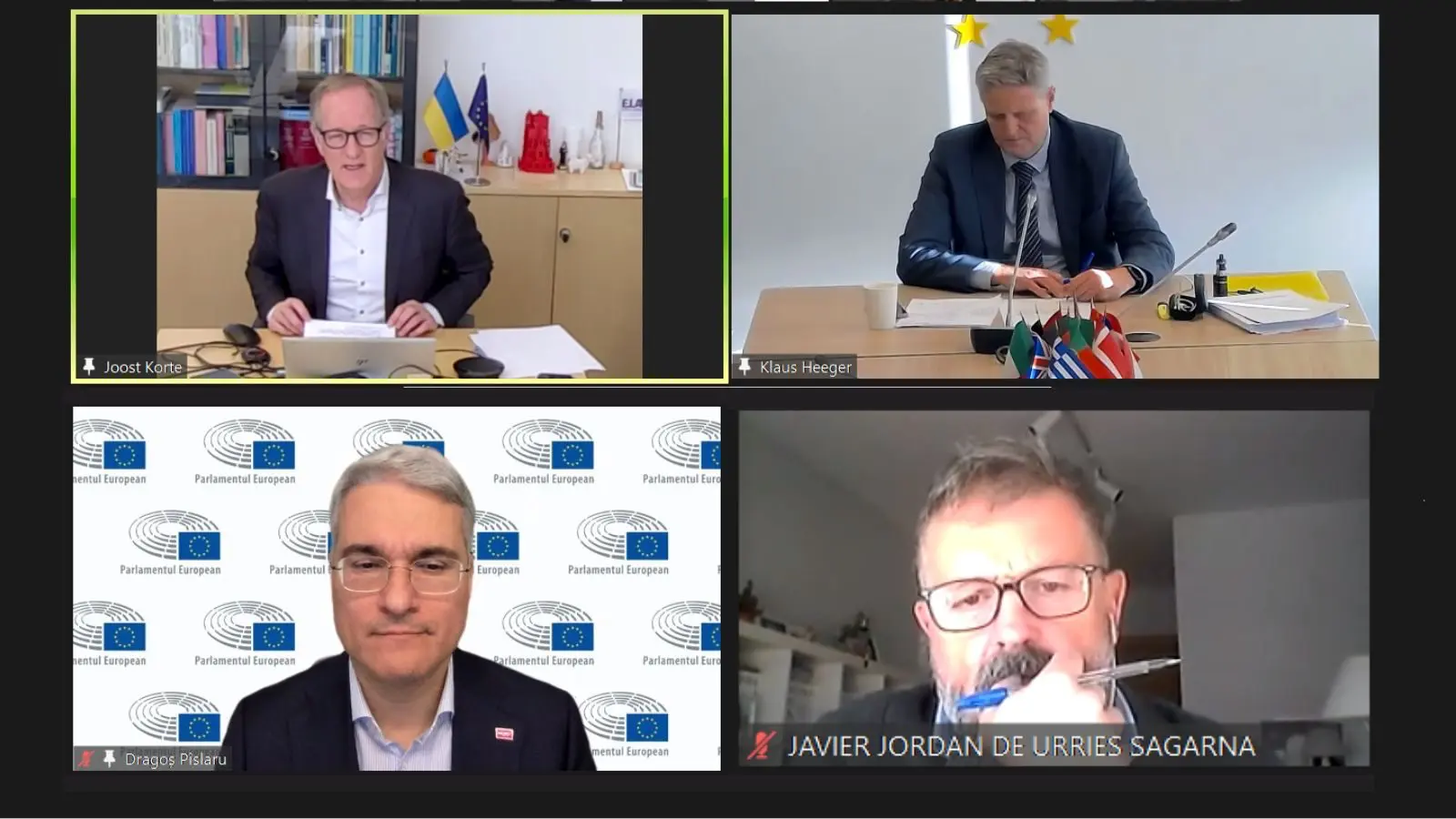

The event, moderated by CESI’s Secretary General Klaus Heeger, served to analyse and take stock of achievements of EU employment and social policy during the closing EU legislative term between 2019 and 2023 – and to sketch remaining challenges and issues that need to be addressed during the next term after the upcoming EU elections in June 2024.
Joost Korte recalled in particular the challenging political context that the EU was operating in during the last years. He stressed that after the last EU elections in 2019 nobody could foresee the acute challenges that we would face during the next years – a Covid pandemic, a war in Ukraine, surging inflation – but that EU could deliver important initiatives for workers despite resources constantly being diverted to crisis management. He named new EU directives on minimum wages, pay transparency and women on boards as examples.
Taking this further, Dragos Pislaru emphasised the importance of the investment-based approach to the social and economic consequences of the Covid pandemic. He stressed the role of the EU’s Recovery and Resilience Facility (RRF) to mitigate adverse consequences in the Member States and to enable them to achieve a sustainable and socially inclusive economic re-bounce. He also noted the central role that the EU’s SURE instrument (the EU’s temporary Support to mitigate Unemployment Risks in an Emergency) played to enable struggling companies to keep workers in employment during the Covid pandemic lockdowns. Without the instrument, many more workers would have been laid off into unemployment and would have needed to be re-hired and lengthely retrained after the jobs, he stressed. SURE, he concluded, enabled a relatively swift economic recovery following the worst times of the pandemic.
Javier Jordán de Urries, Vice-President of CESI and affiliate of CESI’s Spanish member union CSIF, stressed three priorities for the EU to go forward in employment and social affairs during the next years: First, the EU would need to further encourage trade union pluralism and inclusive social dialogue at the EU level and in the Member states. Second, he said, the EU would need to further advance a strong public service agenda. The vital role that public services play for many citizens, workers and businesses does not match with the year-long underinvestment that compromised on the service delivery of many parts of the public sector in Europe, he noted. More investments would be required in many parts of the public sector in many Member States – in facilities, equipment and the personnel. Third, he emphasised the need for the EU to further develop its social Acquis – ranging from a revision of EU directives on fixed-term work, part-time work and temporary agency work to a revision of exisiting EU rules on public procurement, with a view to anchoring clear criteria for decent work in tender award procedures.
All participants agreed on the need to highlight a constructive perception of the added value of the EU ahead of the EU elections in June also – and especially – in the area of employment and social affairs.

.png)


Yesterday, the Council adopted a Recommendation on addressing housing exclusion and homelessness, marking another step towards a stronger European response to the housing crisis - a concern especially of young persons and workers across Europe.
.png)
In Madrid, on 14 October 2026, the European Confederation of Independent Trade Unions (CESI), together with its Spanish member organisation SATSE, brought together trade union representatives and European stakeholders, including member of the European Parliament Alicia Homs and Eurofound, for a regional conference organised in the framework of the EU co-funded DIALOGUE+ project.

In its response to a European Commission consultation on the activation of people facing barriers to employment, CESI calls for measures that prioritise quality jobs, adequate social protection and performing public services to help people access jobs.
Subscribe now and receive newsletters and much more!