

by


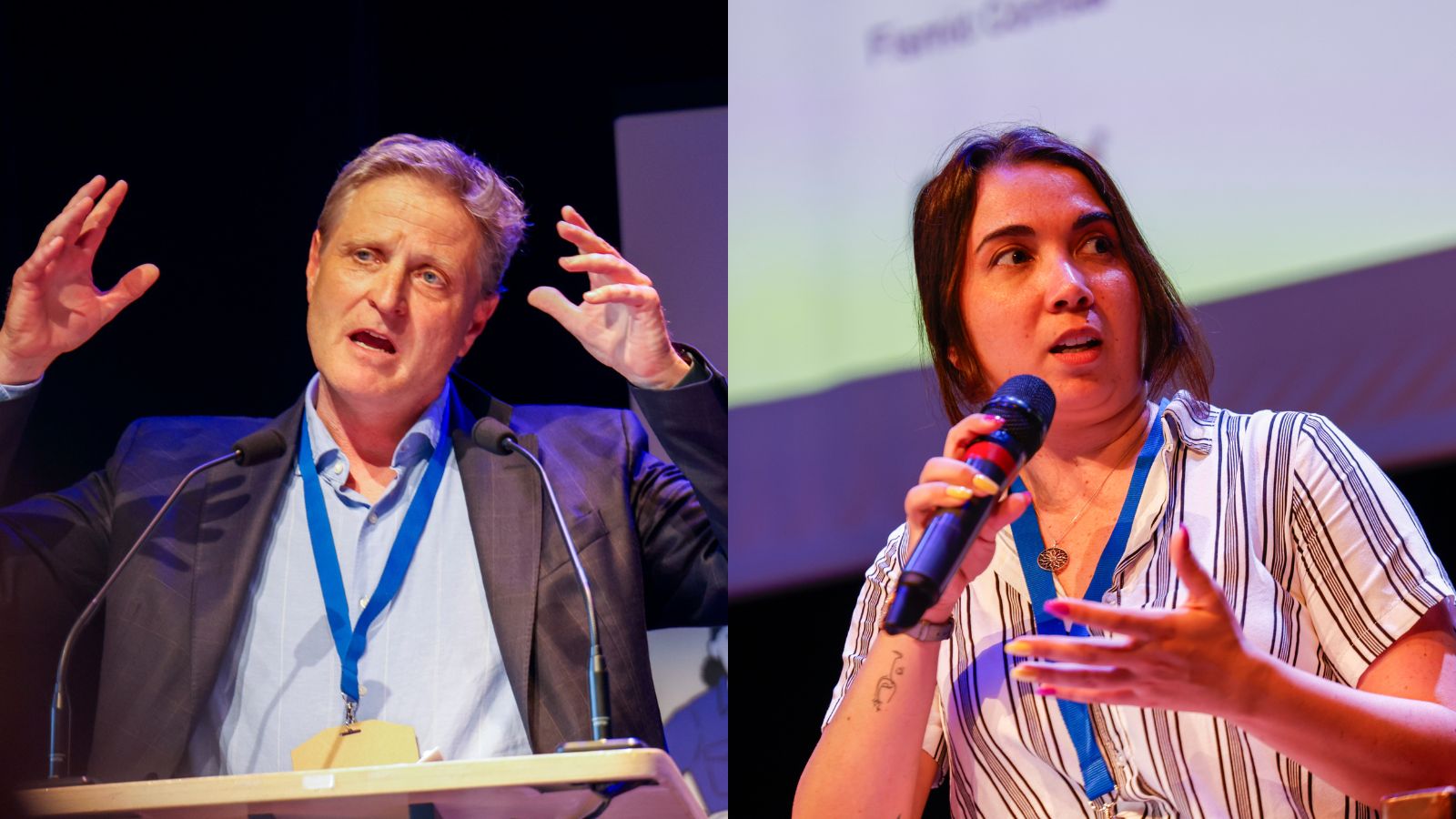
Building on the insights and discussions from CESI’s ‘Summer Days 2024‘ on AI, CESI Secretary General Klaus Heeger and Sara Rinaudo, Chairwoman of CESI’s working group on ‘The Future of Work’, published a joint article on the ‘EUobserver’, delving into the role of artificial intelligence in the workplace.
The lessons from the event provided a strong foundation for this exploration, highlighting the critical conversations surrounding AI and its integration into the modern workforce.
AI at work: handle it with humility, yet confidence
In the complex landscape of algorithms, we are still seeking answers to the very basic question: how can we ensure that the integration of AI into our workplaces benefits not only employers and businesses’ efficiency and profitability but also workers’ needs and rights?
Diverging interests, priorities and expectations, along with the inherent complexity of AI systems will make it challenging.
For many, AI appears as the number one threat to employment. As companies swiftly adapt to new technologies, they fear that job displacement, job insecurity and precarious working conditions could become the new standard — even for the high-skilled workforce.
Workers’ rights, and especially their autonomy, could be dramatically restricted by enforcing rigid decision-making, constant performance monitoring, and limiting creativity and personal judgement.
And all this in an era when the world of work strives to overcome the consequences of repeated global crises.
Yet, the opportunities presented by AI are immense, for the industries, but also for workers themselves.
Artificial Intelligence is not only a tool to boost productivity, it is at the same time (or, more precisely, it can become) the catalyst for safer and healthier workplaces, improved work-life balance, and (why not?) a mechanism that will strengthen collective bargaining and support workers’ collective action by improving communication, coordination and strategic planning.
Just as railways initially faced scepticism and opposition, modern technologies naturally provoke understandable fears. AI has the potential to become a ‘monster’, but it can also serve as a crucial force driving us towards a more competitive and sustainable future.
…
Read the full article here!

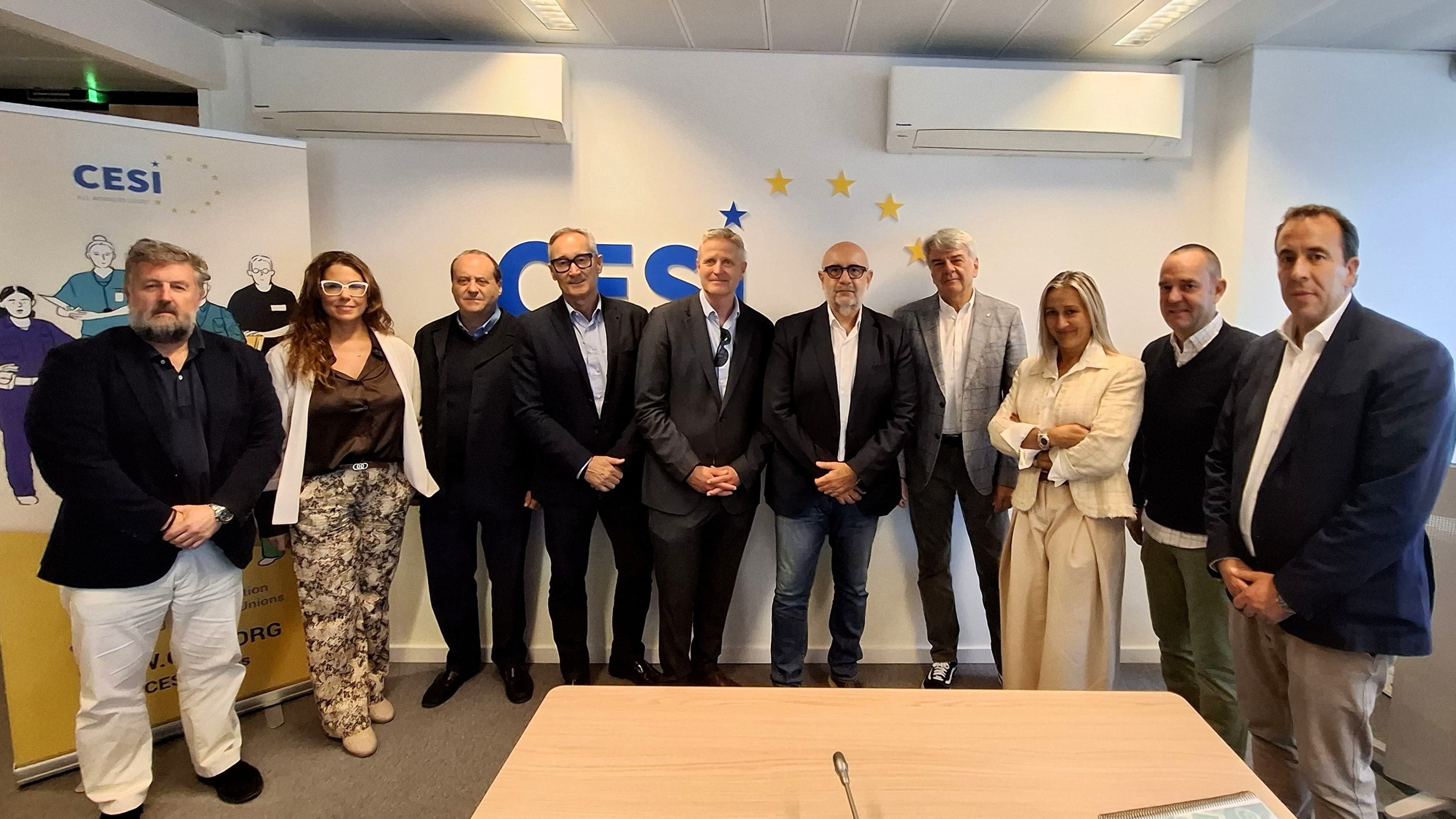


On September 22 and 23, CESI hosted a visit of a delegation comprising the leadership of its Spanish member organisation CSIF in Brussels for trade union policy advocacy meetings to implement the European Pillar of Social Rights in the Spanish country context.
Subscribe now and receive newsletters and much more!

.png)