


by


The health sector plays a key role in ensuring public health and qualitative life for European citizens. Despite the undisputable importance of healthcare providers for society, many workers who provide the needed care do not have access to a sufficient level of protection at work when dealing with dangerous substance, carcinogens and radiation. Every year, too many workers are exposed to dangerous medication and radiation (over 20 mil/year EU-wide) and affected by carcinogenic, mutagenic and reprotoxic substances.
Although the EU recognises that dangerous substances represent an important chemical risk factor in health care, there is no legislation in Europe that specifically addresses the risks posed to healthcare personnel. CESI’s Spanish affiliate SATSE, in a campaign launched last year, has been a front-runner to bring forward this loophole to the Spanish government and to the EU institutions.
Esther Reyes Diez, affiliate of SATSE and President of the CESI trade council ‘Health’, stated: “While EU and national member state legislation may provide protection in the workplace against a wide variety of hazardous substances, there is no legislation to address the issue of dangerous medication. These are considered by EU-OSHA a few of the most important chemical factors in health. More protection must be offered to those that protect and care for us.”
Javier Jordan de Urries, affiliate of CESI’s member CSIF and President of CESI’s commission ‘Employment and Social Affairs’, highlighted that exposure to dangerous substances is of fundamental importance for the entire health sector as well as for law enforcement, emergency, fire and civil protection services. Encarna Abascal, the Health and Security Secretary within CSIF, emphasized the importance of introducing a gender perspective when assessing the with health and safety/ security sectors. Many studies show that there are different outcomes to dangerous substances for men and women. Ms Abascal also presented the CSIF campaigns on the impact of dangerous substances in the case of firefighters.
The importance of the exchange of good practices within the EU was emphasised by SATSE spokesperson María Carmen Vide, who gave concrete examples. José Antonio de Leniz Aspiazu, representative of SATSE in the Spanish Euskadi region, referred in particular to the importance of “providing real protection to healthcare professionals, many of them being vulnerable nurses and care-givers responsible for the preparation and the administration of the amount of dangerous drugs in their daily work.”
Given the evidence provided and the state of play of EU legislation in the field, pleads for a revision of the 2004/37/EC directive on carcinogens and mutagens to address the issue of health and safety for medical staff dealing with dangerous medicines at work are increasing.
Through its trade council ‘Health’, CESI encourages its member organisations to invest in information and training campaigns for their workers in order to better mitigate the risks in the workplace. More coordinated efforts are also needed at national level for better regulations, and the more stringent application of the labor law. In this context, the forthcoming European Labour Authority may play an important role.
Last but not least, patients and their family might be affected by dangerous medication. For this reason, the overall recommendation of CESI and its members lies in raising awareness for existing threats, in improving the control for the use of dangerous substances, and, if possible, in increasingly falling back on less dangerous substances.
In a statement following the visit of the CESI delegation to EU-OSHA, CESI Secretary General Klaus Heeger underlined that more investment should be made to ensure the adequate protection and care for those who take care of others.
Picture: CESI/SATSE/SCIF delegation at EU-OSHA © CESI 2019


On UNESCO’s World Teachers’ Day 2026, Luc Viehé, President of the CESI's Expert Commission ‘Education’, calls for renewed attention to teachers’ working conditions and to the place of education in national and European policy priorities.
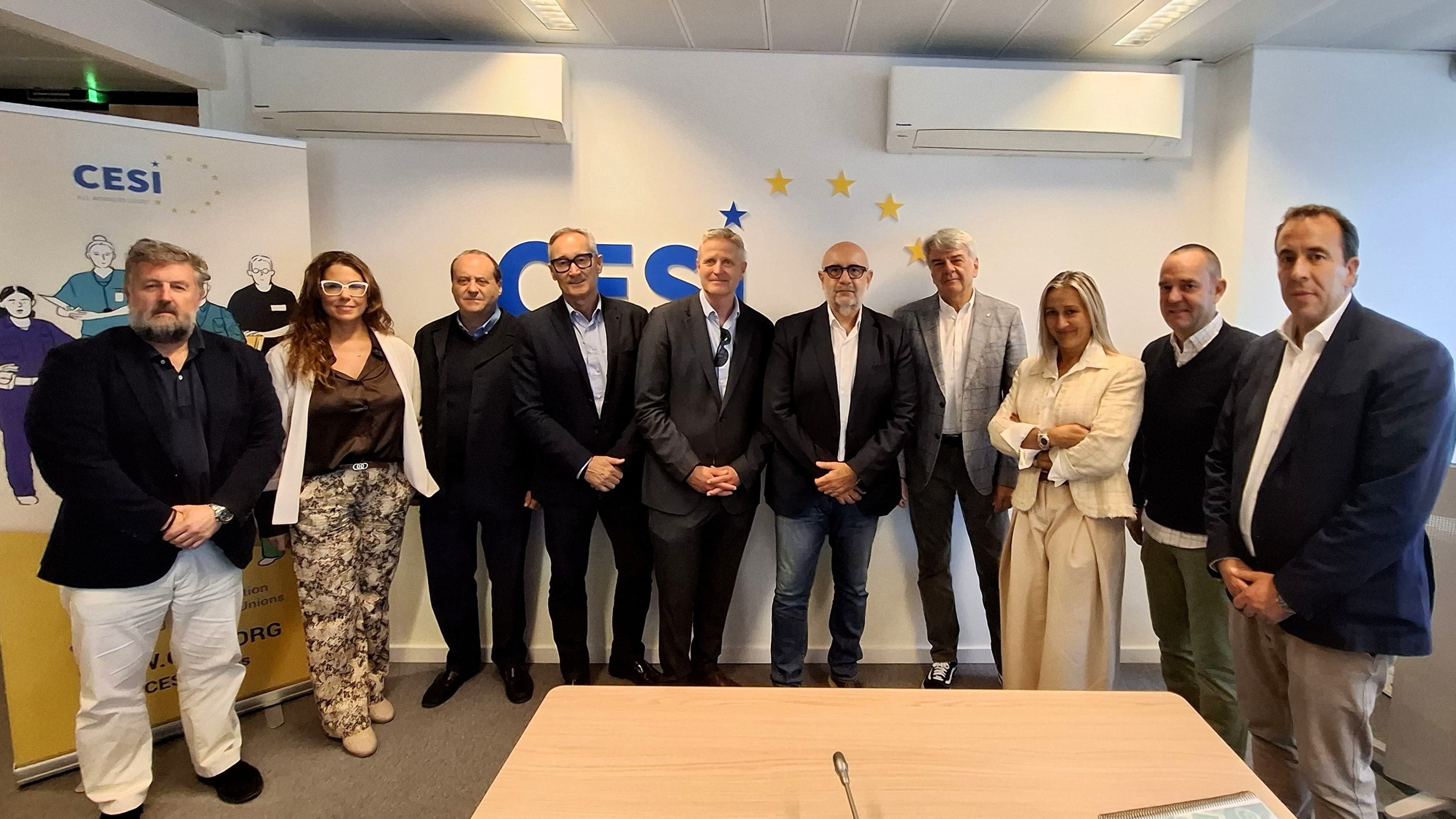
On September 22 and 23, CESI hosted a visit of a delegation comprising the leadership of its Spanish member organisation CSIF in Brussels for trade union policy advocacy meetings to implement the European Pillar of Social Rights in the Spanish country context.
Subscribe now and receive newsletters and much more!